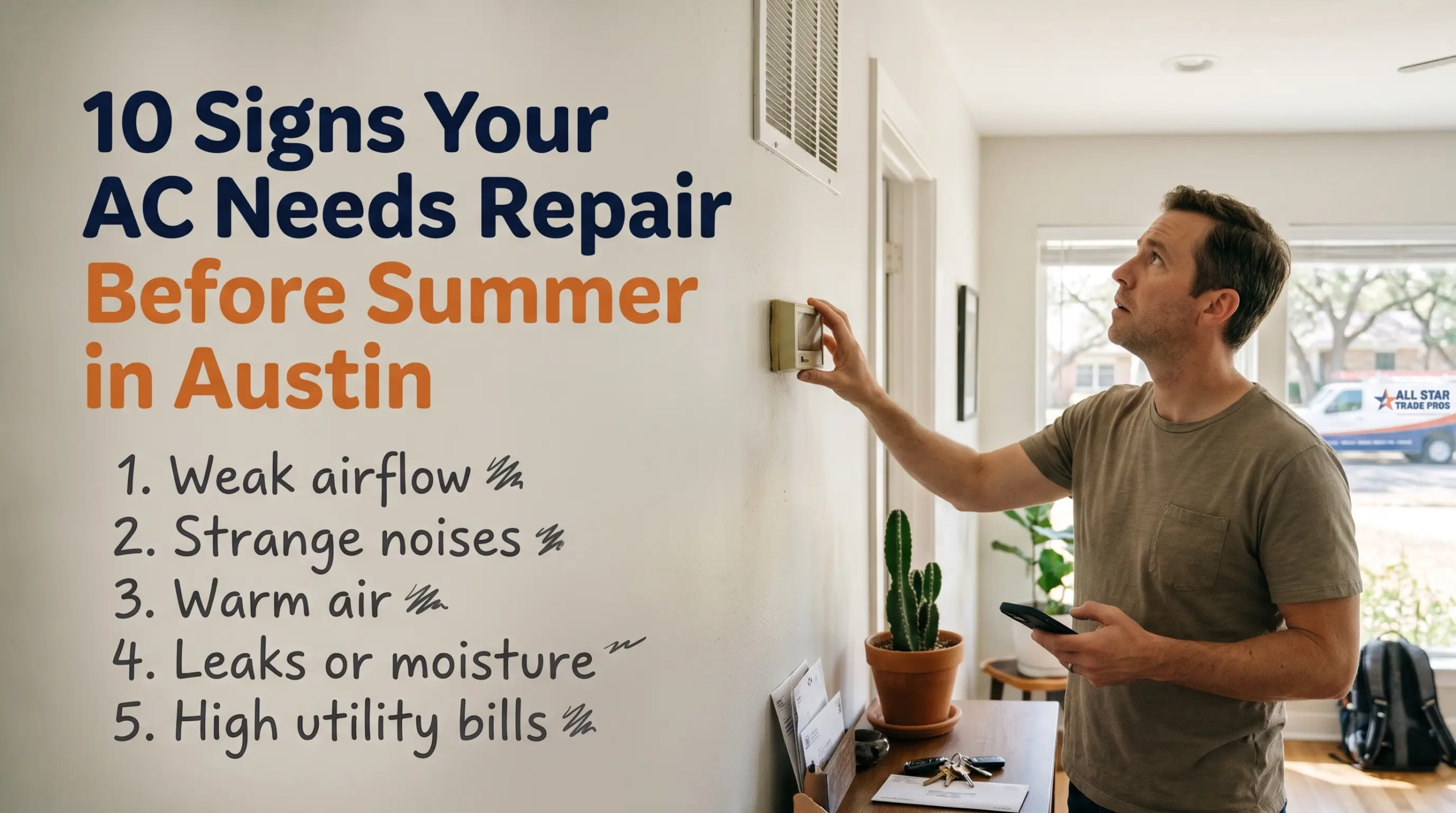
These are the most common signs your AC needs repair:
- Warm air from the vents
- Weak airflow
- Strange noises
- Ice on the refrigerant lines
- Water around the indoor unit
- Short cycling
- Bad smells
- High humidity indoors
- A sudden jump in your electric bill
- A system over 12 years old that keeps needing fixes
If you notice any of these in Austin, have the system checked in March or April. A spring repair costs less, gets done faster and is far easier to live with than a breakdown during a July heat wave.
Below, we explain each sign in plain terms. You’ll learn what it usually means, what you can check yourself and when to call a technician.
Why Austin Summers Expose AC Problems
A small problem you don’t notice in April can turn into a full breakdown by July. Austin’s heat makes an air conditioner work harder and longer than in most of the country.
- More triple-digit days. From 1991 to 2020, Austin averaged 29 days a year at 100°F or hotter. In 2023, the city had 80 of them.
- Long runs with no break. On a 100°F afternoon, a central AC may run almost nonstop for hours. Worn capacitors, weak motors and low refrigerant often fail under that load.
- Humidity on top of heat. Your AC removes moisture as well as heat. Austin’s humid spring and early summer make that second job harder and keep the coil and drain line wet all the time.
- Busy-season delays. When a heat wave hits, every HVAC company in Central Texas gets flooded with calls. You can book a spring visit easily. A same-day visit on the Fourth of July is much harder to get.
That’s why timing matters. An HVAC inspection in Austin in March or April catches most of the problems below before the first 100-degree day, which usually comes in early July.
10 Signs Your AC Needs Repair
1. Your AC blows warm or lukewarm air
This sign is the easiest to spot. With the AC running, hold your hand up to a supply vent. The air should feel clearly cold, usually 15 to 20 degrees cooler than the air going into the return.
Common causes: a dirty filter, a tripped breaker on the outdoor unit, low refrigerant from a leak, a failed capacitor or a compressor that won’t start.
What to check first: Make sure the thermostat is set to COOL and not just FAN. Change the filter and confirm that the outdoor unit is running. If the air is still warm, call for AC repair. Our guide on why your AC is not cooling walks through these checks in more detail.
2. Airflow from the vents is weak
If cold air barely trickles out and the back bedrooms never cool down, something is blocking the airflow.
Common causes: a clogged filter, closed or blocked vents, a dirty evaporator coil, a failing blower motor, or crushed and leaky ducts in the attic.
Weak airflow does more than leave rooms warm. It can also freeze the coil, which leads straight to sign #4.
3. You hear grinding, squealing, banging or buzzing
A healthy AC makes a steady hum and the sound of moving air. A new noise usually means a part is wearing out.
| Noise | What it often means |
|---|---|
| Squealing | Worn blower or fan motor bearings, or a slipping belt |
| Grinding | Motor bearings failing |
| Banging or clanking | A loose or broken part inside the unit |
| Buzzing or humming without starting | A failing capacitor or contactor |
| Clicking that repeats | An electrical or control problem |
If you hear grinding or banging, turn the system off. If you keep running it, a small repair can turn into a motor or compressor replacement.
4. Ice forms on the lines or coil
It sounds strange in Texas, but frozen ACs are common. You might see frost on the copper line at the outdoor unit or ice on the indoor coil.
Common causes: restricted airflow or low refrigerant. Both make the coil too cold, so moisture freezes on it.
What to do: Set the thermostat to OFF and the fan to ON so the ice can melt. Then replace the filter. If the coil freezes again, you probably have a refrigerant leak, and a licensed technician needs to fix it. Adding refrigerant without fixing the leak only works for a short time.
5. Water pools near the indoor unit
During an Austin summer, your AC pulls a lot of water out of the air. That water should flow through a drain line to the outside or to a floor drain.
Common causes: a clogged condensate drain line, a cracked drain pan, a failed condensate pump, or a coil that froze and then melted.
Catch this early. Overflowing water can soak drywall and ceilings, and mold grows fast in damp spots. If your system is in the attic, a backed-up drain can stain the ceiling below before you notice anything else.
6. The system short cycles
Short cycling means the AC turns on, runs for a few minutes, shuts off and then starts again. On a hot day, a normal cooling cycle runs much longer.
Common causes: an oversized system, a dirty filter, a frozen coil, low refrigerant, an electrical fault, or a thermostat in a bad spot, like near a supply vent or in direct sun.
Short cycling wastes power and wears out the compressor, which is the most expensive part of your system. It also leaves moisture in the air, which ties into sign #8.
7. You smell musty, burning or sour odors
Your nose can tell you a lot about your AC.
- Musty or moldy: moisture and mold in the drain pan, coil or ducts
- Burning or electrical: overheating wiring or a failing motor. Turn the system off at the thermostat and the breaker, then call a technician.
- Rotten egg: If you have gas appliances, leave the house and call your gas company first. Treat it as a gas problem until someone proves otherwise.
- Sweet or chemical: sometimes a sign of a refrigerant leak
8. Your home feels sticky even when it’s cool
A working AC should keep indoor humidity at or below 50%. If the thermostat reads 74°F but the air feels damp and clammy, your system isn’t removing enough moisture.
Common causes: an oversized unit that cools too fast, short cycling, a fan set to ON instead of AUTO, or low refrigerant. A cheap hygrometer will show you the humidity level. If it stays above 55% in summer, have the system checked.
9. Your electric bill jumps for no clear reason
Compare this summer’s bill with the same month last year. A hotter year will raise it a little. A big jump in similar weather means your system is working harder than it should.
Common causes: a dirty filter, dirty coils, low refrigerant, leaky ducts or worn parts. The U.S. Department of Energy says that replacing a dirty, clogged filter alone can lower AC energy use by 5% to 15%. Dirty coils and refrigerant problems add even more to the bill.
10. The system is old and keeps needing repairs
Age alone isn’t a reason to replace an AC that works. But when an older system needs a repair every season, pay attention.
The Air-Conditioning, Heating, and Refrigeration Institute (AHRI) says a well-maintained central AC should last at least 12 to 15 years. Austin’s long cooling season often puts systems at the low end of that range.
Also check which refrigerant your system uses. You’ll find it on the outdoor unit’s label. R-22 systems now cost a lot to recharge because new R-22 production and imports ended on January 1, 2020. See the repair-or-replace section below.
What Happens During an HVAC Inspection in Austin
A spring HVAC inspection is a preventive visit. The technician checks every major part of your cooling system before the heavy-use season starts. For most Austin homes, the best time is March through early May, after the last cold snaps and before the heat settles in.
A typical spring inspection covers:
- Electrical checks: capacitor, contactor, wiring and connections
- Refrigerant pressure: confirms the charge is correct and looks for signs of a leak
- Outdoor coil cleaning: removes cottonwood, grass clippings and dust that block heat transfer
- Indoor coil check: looks for dirt, corrosion and mold
- Drain line clearing: prevents overflow during humid months
- Motor and fan inspection: listens for worn bearings and checks amp draw
- Thermostat calibration: confirms the readings match the actual temperature
- Airflow and filter check: makes sure the system moves the right amount of air
The visit usually takes about an hour. Your technician should tell you clearly what’s fine, what to keep an eye on and what needs fixing now. Ask for photos of any problems they find.
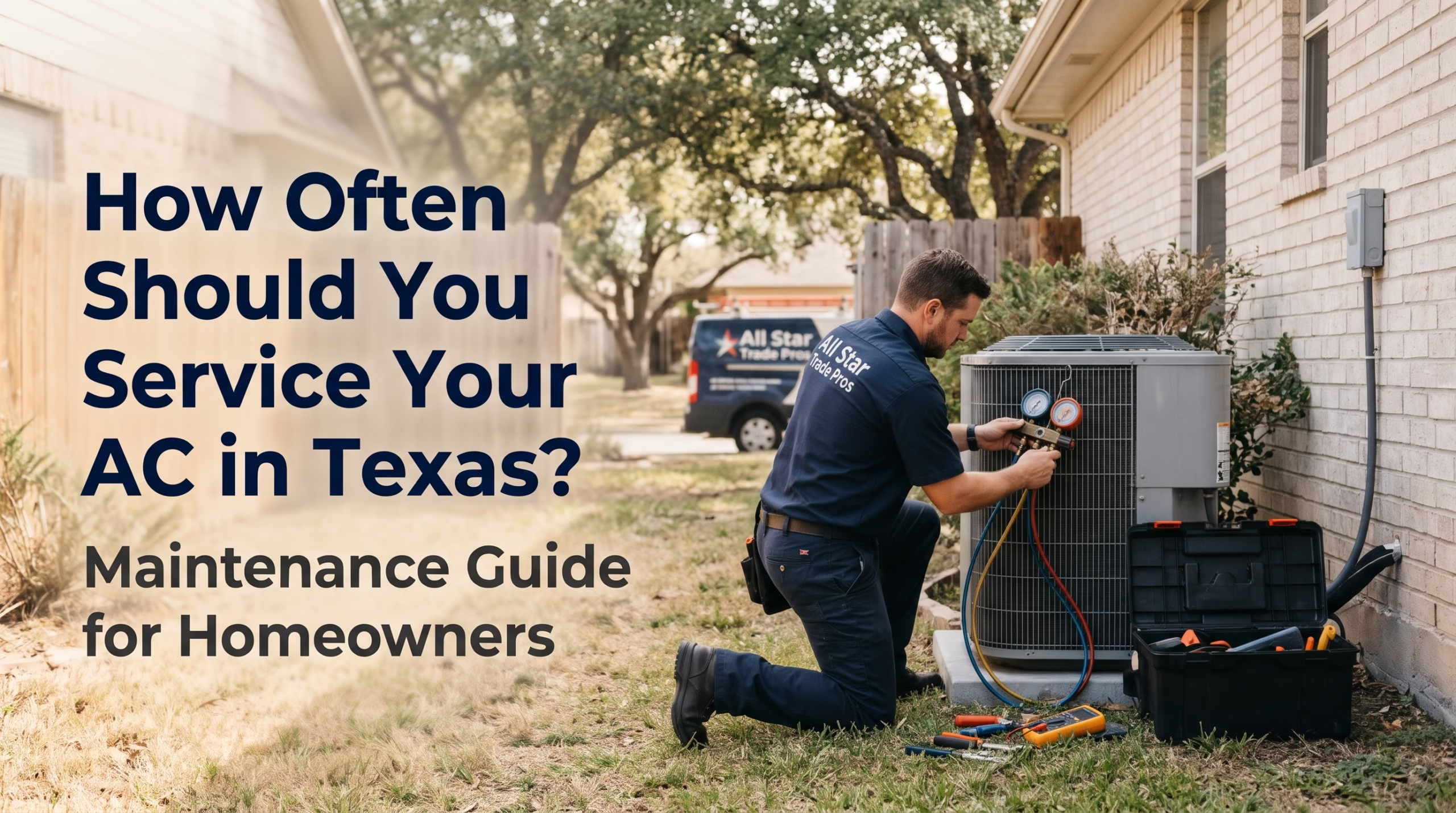
How often should you book one? Most experts say once a year. Our post on how often to service your AC in Texas explains why spring is the best season. If you’d rather not keep track yourself, a maintenance plan like the All-Star Service Plan handles the scheduling and gives members priority during the busy season.
The Bottom Line
The signs your AC needs repair rarely show up all at once. They start small: a new noise, weaker airflow, a stickier house or a higher bill. In Austin, where summer brings weeks of 100-degree heat, those small problems tend to turn into breakdowns right when you need cooling the most.
Catch them in spring. Change your filter, watch for the 10 signs above and book an HVAC inspection before the heat arrives.