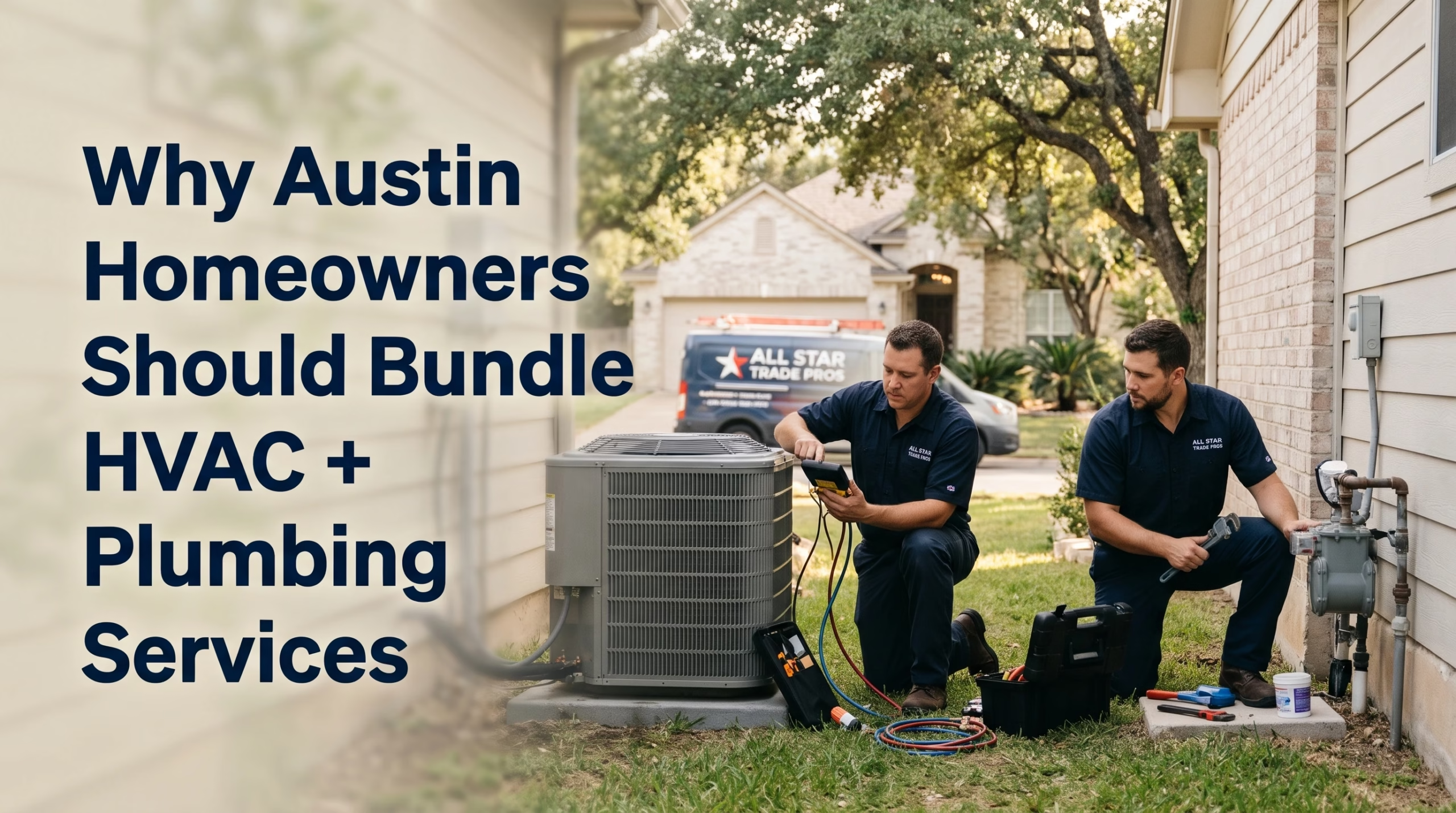
Using one company for your HVAC and plumbing can save Austin homeowners time, hassle, and sometimes money. You get one number to call, one schedule to keep track of, and one team to hold responsible when something goes wrong. In a city where a dead AC in August or a frozen pipe in January can wreck your week, that adds up.
This guide explains how bundled HVAC and plumbing service in Austin works, when it makes sense, and how to pick a provider you can trust.
What Does Bundling HVAC and Plumbing Mean?
Bundling just means using one licensed company for both your heating and cooling and your plumbing. Some companies sell a combined maintenance plan. Others simply handle both trades, so scheduling and billing stay in one place.
A typical home services combo in Austin, TX might include:
- An annual AC tune-up
- A fall heating check
- A water heater flush and inspection
- Leak and drain checks
- Priority scheduling for repairs
- Discounts on parts or labor, if the company offers them
What you actually get depends on the company. Ask for the details in writing.
Why Your HVAC and Plumbing Systems Are More Connected Than You Think
Most people treat these as two separate worlds. They overlap more than you’d expect.
Your AC makes water: When it cools the air, it pulls moisture out, and that water leaves through a condensate drain line. If the line clogs, water backs up and can leak into your ceiling, closet, or walls. It’s an HVAC problem with a plumbing result.
Your water heater and furnace often share a space: In many Austin homes, both sit in the same closet, garage, or attic. A team that knows both trades is more likely to notice trouble with either one.
Freezes hit both at once: When a hard cold front moves through Central Texas, pipes can burst while the heating system struggles to keep up.
Humidity points both ways: Moisture problems can come from a leaking pipe, an AC that isn’t working right, or both.
When one company understands both systems, it’s easier to find the real cause, and you’re not bounced between two contractors who each say it’s the other’s problem.
6 Reasons Austin Homeowners Benefit From Bundling
1. One Call Instead of Many
When something breaks, you don’t have to research two contractors, compare reviews, and check availability twice. One call can get both problems on the schedule, sometimes for the same visit.
2. Easier Maintenance
Most of us forget about maintenance until something breaks. A combined plan can fold your AC tune-up, heating check, and plumbing inspection into one yearly routine, so nothing slips.
3. Possible Savings
Some companies offer lower prices on membership plans, waived service fees, or discounts on repairs for customers who use more than one service. Not all of them do. Ask what’s included, then compare it to what you’d pay to book each service on its own.
4. Clear Accountability
Say a leak shows up near your air handler. Is it the drain line, a supply pipe, or the unit itself? If one company handles both trades, nobody points fingers. They diagnose it and fix it.
5. Faster Help in an Emergency
Plan members often get priority scheduling. In a heat wave, that can mean being seen sooner. Just confirm exactly what “priority” means in the terms before you sign up.
6. A Record of Your Home
A company that services your whole home builds a history of your systems: their ages, past repairs, and repeat problems. That helps you plan replacements instead of getting hit with a surprise bill.
Austin-Specific Reasons Bundling Makes Sense
Long, Hot Summers Push Systems Hard
Austin’s AC systems work harder than most. Between 1991 and 2020, the city averaged 29 days a year at 100°F or higher. In 2023, Camp Mabry hit 100° or more for 45 days in a row. Pair your AC tune-up with a plumbing check, and one visit can cover the condensate drain, the water heater, and any pipes the technician can see.
Hard Water Is Tough on Water Heaters
Austin gets much of its water from the Colorado River and the Highland Lakes, and local water is generally considered hard. Hard water leaves mineral scale inside a water heater. That scale can lower efficiency and shorten the tank’s life. Most water heaters last 8 to 15 years, and annual flushing and an anode rod check every 2 to 3 years can help them last longer. A plumbing check during your yearly visit is a simple way to stay on top of it.
Occasional Hard Freezes Catch Homes Off Guard
Austin doesn’t freeze often, so many homes aren’t ready when it does. The February 2021 winter storm showed how bad it can get. The Texas Department of State Health Services counted 246 deaths statewide, including 28 in Travis County. Burst pipes and heating failures hit many Central Texas homes at the same time. A company that handles both trades can get you back to normal faster, because you’re not waiting on two separate crews.
When Bundling May Not Be the Best Choice
Bundling works well for a lot of homes. It isn’t right for every one.
- The company is stronger in one trade. A great HVAC company may have an average plumbing team. Read the reviews for each service, not just the overall score.
- The plan costs more than it saves. Add up what you’d actually use in a year, then compare.
- You need a specialist. A whole-home repipe or a custom duct design may call for a contractor who does only that.
- The contract is vague. Walk away from unclear terms, long lock-ins, or renewals that are hard to cancel.
How to Choose an HVAC and Plumbing Company in Austin
A reliable HVAC and plumbing company in Austin should have these things in place:
- Licenses for both trades. In Texas, HVAC contractors are licensed by the Texas Department of Licensing and Regulation (TDLR), and plumbers are licensed by the Texas State Board of Plumbing Examiners (TSBPE). You can verify both online before you hire.
- Insurance and written estimates. Get a clear quote before work starts.
- Strong local reviews. Read recent and older ones, and see how the company responds when someone complains.
- Clear plan details. Ask what’s covered, what’s discounted, and how often visits happen.
- Honest recommendations. A good technician explains your options. They don’t push a replacement when a repair will do.
- Permit know-how. Jobs like water heater or HVAC replacements may need permits in Austin. A pro should know the rules and handle them.
Before you sign up, ask:
- What’s included in the plan?
- Are repairs discounted?
- Is there a contract term or a cancellation fee?
- How fast can members get service?
- Are your technicians employees or subcontractors?
A Simple Yearly Schedule for Austin Homes
| Season | Service |
|---|---|
| Spring (March to April) | AC tune-up, condensate drain check |
| Summer | Monthly filter check, watch for leaks or odd noises |
| Fall (October to November) | Heating check, water heater flush, pipe insulation check |
| Winter | Keep faucets and exposed pipes protected during freezes |
Frequently Asked Questions
Is it cheaper to bundle HVAC and plumbing?
Sometimes. It depends on the company’s plan. Compare the plan’s price with what it would cost to book each service on its own.
Can one company really do both well?
Yes, if it has separately licensed, trained technicians for each trade. Check reviews for both services.
What services can be bundled?
Common ones are AC and heating tune-ups, water heater maintenance, drain cleaning, leak detection, and priority repair service.
Do I need a maintenance plan?
Not always. If you want regular upkeep and priority service, a plan is convenient. If you’d rather pay as needed, a simple service call may be enough.
How do I check if a contractor is licensed in Texas?
Use the TDLR website for HVAC contractors and the TSBPE website for plumbers.
Final Thoughts
For many Austin homeowners, bundling HVAC and plumbing makes home care simpler. You make fewer calls, keep up with maintenance more easily, and work with a team that knows how your home’s systems fit together. Just verify the licenses, read the fine print, and make sure the plan fits the way you actually live.