Most homeowners assume their water heater gets a break in summer. The logic makes sense on the surface – the incoming water is warmer, so the unit doesn’t have to work as hard, right?
Not exactly. Summer actually introduces a whole different set of stresses on your water heater, and if your unit is aging or overdue for maintenance, those problems tend to surface right when you need hot water most – guests visiting, kids home from school, more laundry, more showers after pool days.
Here are the water heater problems that consistently show up during summer, why they happen, and what you can do about them.
1. Running Out of Hot Water Faster Than Usual
This is probably the most common summer complaint. Your showers aren’t shorter. Your laundry habits haven’t changed. But suddenly, you’re getting hit with cold water after just one or two showers.
The reason comes down to demand volume. According to the EPA, average household water usage can jump from roughly 320 gallons per day to over 1,000 gallons per day during summer months. More people in the house, more frequent showers after outdoor activity, more dishes – your tank-style water heater is drawing down faster than its recovery rate allows.
What to do: If you have a 40-gallon tank and now have four people showering back-to-back, the math doesn’t work anymore. Spacing out showers by 30 to 45 minutes gives the tank time to recover. If this keeps happening every week, it’s worth getting a plumber out to evaluate whether your unit’s capacity still matches your household’s actual needs. In some cases, upgrading tank size or switching to a tankless system is the practical long-term fix.
2. Water Coming Out Scalding Hot
This one surprises people. They expect cold water problems in summer, not the opposite.
Here’s what happens: during winter, many homeowners bump up the thermostat on their water heater a few degrees because the incoming cold water makes the unit work harder. When summer rolls around, that higher setting is still in place – but now the ambient environment is warmer and the incoming water is warmer too. The result is water that’s uncomfortably hot, sometimes dangerously so.
The U.S. Consumer Product Safety Commission recommends setting your water heater to 120 degrees Fahrenheit. Any higher than that and you’re wasting energy, stressing the unit, and creating a scalding risk.
What to do: Check your thermostat setting. If it’s above 120-125 degrees, bring it back down. If you’re not sure how to access the thermostat on your specific unit, a quick call to a local plumber is faster and safer than guessing.
3. Sediment Buildup Causing Rumbling or Popping Noises
If your water heater has started making sounds – rumbling, popping, banging from the bottom of the tank – that’s typically sediment. Minerals like calcium and magnesium settle at the bottom of the tank over time, and heat causes them to harden into a layer of scale.
Summer accelerates this process. Higher water temperatures speed up mineral precipitation. If your home has hard water, this compounds quickly. That sediment layer forces the heating element to work harder, reduces efficiency, and can eventually damage the tank itself.
What to do: Annual flushing of the water heater tank removes sediment before it becomes a serious problem. If you’re already hearing noises and haven’t flushed the tank in a couple of years, call a plumber to assess whether a flush is sufficient or whether the buildup has already caused damage. A basic flush is inexpensive and extends tank life considerably.
4. Pilot Light Keeps Going Out (Gas Water Heaters)
This one is specific to gas-powered water heaters, especially those installed in attics or garages that aren’t air-conditioned.
When the ambient air temperature around the unit rises above the water heater’s own thermostat setting, the gas valve may fail to open and light the main burner properly. Hot air also rises, which depletes the available oxygen needed for combustion. The result is a pilot light that keeps going out.
If your water heater is in the attic and you’re in a climate that hits 95 to 100 degrees Fahrenheit in summer, this can become a recurring issue.
What to do: First, check whether the installation area has adequate ventilation. Improving airflow around the unit often resolves pilot light problems without replacing anything. If the space is poorly ventilated and temperatures consistently spike in summer, relocating the unit or switching to an electric or heat pump model may be the more permanent solution.
5. Pressure Relief Valve Leaking or Releasing Water
The temperature and pressure relief valve – the T&P valve – is a safety device that releases water if internal pressure or temperature gets too high. In summer, thermal expansion becomes more of an issue. Water heats up, expands, and if there’s nowhere for that pressure to go, the T&P valve opens.
A small amount of discharge from this valve during the hottest part of the day isn’t always a sign of failure – it can be the system doing what it’s supposed to do. But if the valve is dripping consistently or releasing large amounts of water, something is wrong.
What to do: Test the valve by lifting the lever briefly and letting it snap back. Hot water should discharge from the drain pipe. If nothing comes out, or if the valve continues leaking after you release it, get it inspected. A faulty T&P valve is a safety issue, not just a comfort issue. Water pressure inside the tank should sit around 50 to 60 psi – if yours is running higher, a plumber can check whether you need a thermal expansion tank.
6. The “Cold Water Sandwich” in Tankless Water Heaters
If you have a tankless water heater and multiple people are using hot water in sequence, you may have experienced what’s sometimes called a “cold water sandwich” – a burst of cold water that appears between periods of hot water.
This happens because when the first person finishes using hot water, the unit stops heating. The next person turns on the tap and initially draws the hot water still sitting in the pipes. Then, before the heater fully ramps back up, a slug of unheated water comes through – followed by properly heated water again.
Summer usage patterns, with multiple showers happening close together, make this more frequent.
What to do: Staggering shower times by a few minutes helps. Some households also benefit from a small recirculation pump that keeps hot water ready at the tap. If the cold water sandwich is happening excessively, have a plumber check whether your tankless unit is sized correctly for peak demand.
7. Water Heater Leaking Around the Base
Leaks that develop or worsen in summer are often connected to thermal expansion. As water heats up and expands, it puts pressure on connections, fittings, and the tank itself. Older tanks with existing corrosion or weakened seams are more vulnerable.
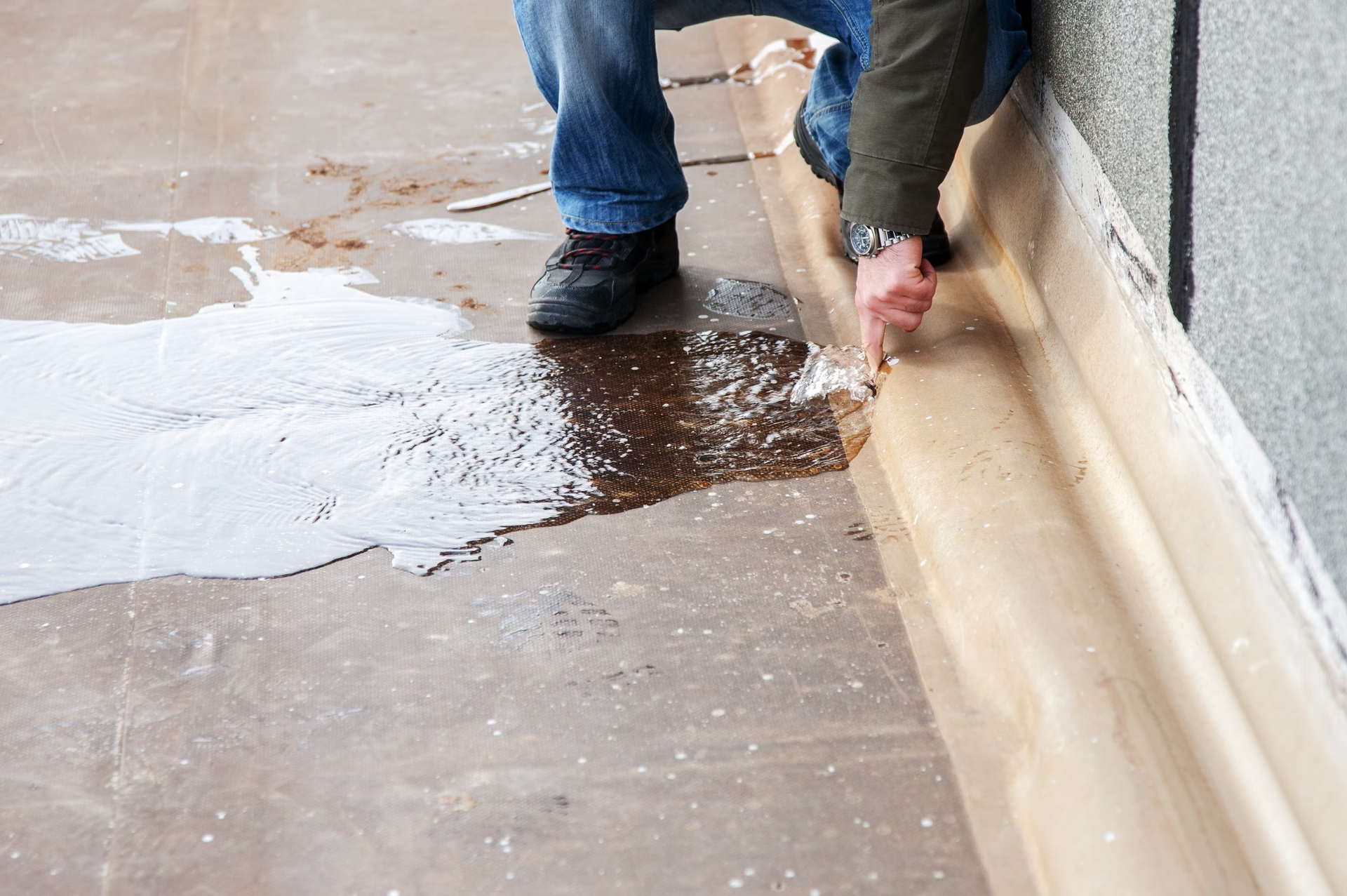
A small puddle under or around your water heater is never normal. Even a slow drip can escalate quickly if the connection fails or the tank develops a crack.
What to do: Check the source first. If water is coming from a loose fitting or connection at the top of the unit, that can sometimes be tightened. If water is coming from the tank body itself, that’s a sign the tank has corroded through and the unit needs to be replaced – there is no repair for a leaking tank. Don’t ignore this one; a failed tank can dump dozens of gallons into your home.
8. Higher Energy Bills Without an Obvious Cause
If your water heater is working harder than it should be – due to sediment buildup, a thermostat set too high, or a heating element starting to fail – it shows up on your energy bill before it shows up as a noticeable comfort problem.
Summer is when many homeowners first notice a spike because their unit was already working inefficiently through winter and spring, and the added demand finally pushes the cost into obvious territory.
What to do: Compare your energy bills month-over-month. If your usage hasn’t changed dramatically but costs are up, the water heater is a good starting point to investigate. A plumber can run diagnostics, check the heating element, test the thermostat calibration, and flush the tank to restore efficiency.
When to Call a Plumber vs. Handle It Yourself
Some of these issues have simple DIY fixes – adjusting the thermostat, staggering shower times, checking the T&P valve. Others require a professional.
Call a plumber when:
– You see water leaking from the tank body, not from fittings
– The T&P valve is discharging continuously
– You have no hot water at all and basic resets haven’t helped
– You hear loud banging or grinding from the tank
– Your gas pilot light keeps going out after attempts to relight it
Attempting to work on gas lines, replace heating elements, or diagnose pressure issues without the right tools and experience creates safety risks that aren’t worth taking.
How to Prevent Most Summer Water Heater Problems
Most of what’s covered above can be avoided or caught early with basic annual maintenance. Here’s what that looks like in practice:
- Flush the tank once a year. This removes sediment and restores efficiency. Best done in spring before summer demand increases.
- Check and replace the anode rod every 3 to 5 years. The anode rod inside your tank attracts corrosive elements, protecting the tank walls. When it’s consumed, corrosion accelerates. Replacement is inexpensive compared to replacing the tank.
- Test the T&P valve annually. A quick lift-and-release test confirms it’s working. If it doesn’t release or doesn’t seal back properly, replace it.
- Adjust the thermostat at the start of summer. If you bumped it up in winter, bring it back down to 120 degrees.
- Inspect for moisture or rust around connections. Catching a small drip early is far less costly than dealing with water damage from a failed tank.
Frequently Asked Questions
Why does my water heater run out of hot water so fast in summer?
Household water usage increases significantly during summer – more showers, more laundry, more outdoor activity. A tank that was adequately sized in winter may not keep pace with summer demand. If the recovery time isn’t matching your usage patterns, the tank size may need to be evaluated.
Is it normal for a water heater to be louder in summer?
Popping or rumbling sounds typically indicate sediment buildup at the bottom of the tank. Higher water temperatures in summer cause minerals to settle faster, which is why this problem often becomes noticeable in warm months. Flushing the tank usually resolves it.
Why is my water too hot in summer when I haven’t changed anything?
The thermostat setting that worked in winter may produce scalding water in summer because incoming water and ambient temperatures are both higher. Check the thermostat and lower it to 120 degrees Fahrenheit if needed.
Can summer heat cause a water heater to fail?
Yes – heat stress, faster sediment accumulation, thermal expansion, and increased usage demand all peak in summer. Units that are already aging or haven’t been maintained are more likely to develop problems or fail during this period.
How often should I have my water heater serviced?
Annual maintenance is the standard recommendation. This typically includes flushing the tank, inspecting the anode rod, testing the T&P valve, and checking connections for leaks or corrosion. If your unit hasn’t been serviced in several years, summer is a good time to get it done before problems compound.
What is the lifespan of a standard tank water heater?
Most tank-style water heaters last 8 to 12 years with regular maintenance. If yours is approaching that range and showing any of the issues listed above – noise, inconsistent temperatures, visible rust, higher energy costs – it’s worth discussing replacement before an emergency situation.