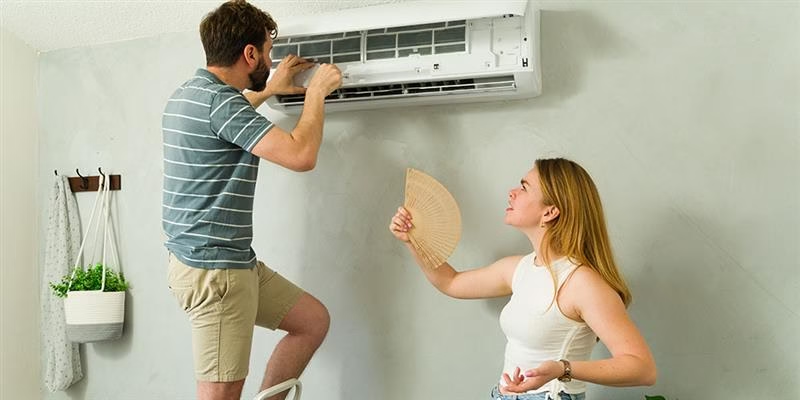
You walk over to the vent, hold your hand up, and feel it – warm air. Your AC is running. The thermostat is on. But something is clearly wrong. This is one of the most common calls HVAC technicians get every summer, and the good news is that most of the time, the fix is straightforward. The tricky part is knowing what you are dealing with before you do anything about it.
Some causes of an AC blowing warm air take two minutes to fix yourself. Others need a certified HVAC technician with the right tools and training. This guide walks you through the most likely culprits, what you can check on your own, and exactly when to stop troubleshooting and make that call.
Why Is Your AC Blowing Warm Air Instead of Cold?
Your air conditioner works by pulling warm air from inside your home, passing it over refrigerant-filled evaporator coils, and pushing the cooled air back through your vents. Any break in that process – at the thermostat, the filter, the coils, the outdoor condenser, or the electrical supply – stops the system from cooling the air properly. The indoor fan keeps running. Warm air keeps coming out. And you keep getting frustrated.
The cause matters a lot here, because the right response is very different depending on what is actually broken.
7 Common Reasons Your Air Conditioner Is Not Cooling
1. The Thermostat Is on the Wrong Setting
This is the most common reason for an AC blowing warm air, and it has nothing to do with the AC itself. If the thermostat got switched to heat mode, or if the fan is set to “On” instead of “Auto,” the system pushes air through your vents without any active cooling happening. Someone in the house may have bumped the settings without realizing it.
Check your thermostat right now. Make sure the mode is set to Cool, the target temperature is lower than the current room temperature, and the fan is on Auto, not On. If it was a settings issue, the cold air should come back within a few minutes.
2. A Dirty Air Filter Is Choking the System
Your air conditioner pulls air through a filter before it reaches the evaporator coil. When that filter gets packed with dust and debris, airflow drops sharply. The coil gets too cold, can ice over, and the air coming out of your vents stays warm because the system can no longer do its job properly.
Pull the filter out and hold it up to the light. If you can barely see through it, replace it. Air filters cost very little and should be swapped out every one to three months during cooling season. This single habit prevents a surprising number of AC problems.
3. Low Refrigerant from a Leak
Refrigerant is the substance that absorbs heat from your indoor air and carries it outside. Without enough of it, your AC simply cannot cool the air – it just moves it. A sealed AC system should never lose refrigerant on its own, so if levels are low, there is a leak somewhere in the line.
Watch for warm air at the vents, ice forming on the copper refrigerant lines near your indoor unit, a faint hissing or bubbling sound from the system, and energy bills that have been climbing without explanation. Refrigerant handling is federally regulated and requires a licensed HVAC technician. Do not attempt to add refrigerant yourself.
4. The Evaporator Coil Has Frozen Over
A frozen evaporator coil sounds like the opposite of a warm-air problem, but the two go hand in hand. When the coil ices up, it cannot absorb heat from the air passing over it. The result is warm or room-temperature air blowing through your vents.
Restricted airflow from a dirty filter is the most common cause. Low refrigerant can also do it. If you see ice on the lines or the indoor unit, turn the AC off and set the fan to On so it can thaw. Give it a few hours. Once the ice clears, replace the filter and try again. If the coil freezes again, call a technician to find the underlying issue.
5. A Tripped Circuit Breaker Cut Power to the Outdoor Unit
Your AC system has two separate units – one inside and one outside. Each has its own electrical circuit. If the outdoor unit’s breaker trips, the indoor air handler keeps running and pushing air, but there is no active cooling happening because the condenser is off.
Go to your electrical panel and find the breaker labeled for your AC or HVAC system. If it has tripped, switch it fully off, wait one minute, then flip it back on. If it trips again right away, or if you smell burning or hear crackling near the panel, leave it off and call a professional. A breaker that keeps tripping is telling you something more serious is wrong.
6. The Outdoor Condenser Unit Is Blocked or Dirty
The outdoor condenser unit releases the heat your AC pulls from your home. If it is caked in dirt, leaves, or grass clippings – or if shrubs have grown too close around it – it cannot expel heat efficiently. The system overworks, overheats, and may blow warm air or shut down entirely.
Clear any debris from around the unit and give it at least two feet of open space on all sides. A gentle rinse with a garden hose can wash away surface grime from the fins. This takes ten minutes and makes a real difference in how well the system runs.
7. The Compressor Is Failing
The compressor drives the entire refrigerant cycle. It pressurizes the refrigerant so it can absorb and release heat. When the compressor starts to fail, the system loses its cooling ability fast. You might notice the outdoor unit running but producing no cooling effect, loud or unusual noises from outside, or the system cycling on and off more than normal.
A failing compressor is one of the more serious and costly AC repairs. This is not a DIY fix. A certified technician needs to diagnose it properly, and depending on the age of the system, replacement may make more financial sense than repair.
Quick Checks to Run Before You Call Anyone
Before you pick up the phone, go through this short checklist. These checks take less than ten minutes and resolve the problem more often than you might expect.
Check that the thermostat is on Cool mode and the fan is on Auto. Replace the air filter if it looks gray or clogged. Reset the outdoor unit’s circuit breaker if it tripped. Clear any debris from around the condenser unit outside. Look at the indoor unit for any visible ice on the coils or refrigerant lines. Walk through your home and make sure all supply and return vents are fully open and not blocked by furniture or rugs.
If you check all of these and the AC is still blowing warm air, it is time to call a professional. Our team handles everything from quick tune-ups to full system repairs. Give us a call today and we will get your home cool again.
When to Call an HVAC Professional
Some AC problems are genuinely outside what a homeowner should handle. Call a licensed HVAC technician if your system keeps blowing warm air after you have checked the basics, if you suspect a refrigerant leak, if the circuit breaker trips repeatedly, if you hear grinding, squealing, or clanking from the unit, or if the system keeps shutting off and restarting on its own.
Refrigerant leaks and electrical faults carry real safety risks. A trained technician can diagnose the problem accurately, fix it correctly the first time, and make sure nothing is left that could cause further damage to the system.
How to Keep This from Happening Again
Routine care is the best insurance against an AC that stops cooling. Change the air filter every one to three months depending on how hard your system works. Book a professional maintenance check each spring, before cooling season starts – a technician will clean the coils, check refrigerant levels, test the electrical components, and catch small issues before they become expensive ones.
Keep the outdoor condenser unit clear year-round. Trim back any plants growing close to it and hose off the fins once or twice during the season. Pay attention to early warning signs: slightly weaker cooling than normal, longer run times, or higher energy bills are all signals that something is off. Catching a problem early is always cheaper than an emergency repair in the middle of July.
Frequently Asked Questions
Why is my AC running but not cooling the house?
The most common reasons are a wrong thermostat setting, a clogged air filter, a tripped breaker to the outdoor unit, or low refrigerant from a leak. Start with the basic checks before calling for service.
Can I fix an AC blowing warm air on my own?
You can handle thermostat settings, filter replacement, breaker resets, and clearing debris from the outdoor unit yourself. Refrigerant leaks, compressor issues, and electrical faults need a licensed HVAC technician.
Is it safe to keep running my AC if it is blowing warm air?
Running the system briefly while you troubleshoot is generally fine. If you suspect a refrigerant leak, see ice on the unit, or the breaker keeps tripping, turn the system off and call a technician. Running a damaged system can make the problem worse and shorten the life of the equipment.
How much does it cost to fix an AC that is blowing warm air?
The cost depends entirely on the cause. A new air filter costs a few dollars. Fixing a refrigerant leak typically runs a few hundred. Compressor replacement can cost significantly more. A professional diagnosis tells you exactly what you are dealing with before you commit to any repair.